| . |
| . |
| Scrutinizing the evidence for breast cancer procedures and treatments |
| Supplement Strategies - Vitamin D3 |
| . . |
| Breast cancer patients with low vitamin D levels had a 73 percent higher risk of death than women who were vitamin D- sufficient. This study was released by University of Toronto researchers (Goodwin, 2008). Women with low levels of Vitamin D had more aggressive tumors. The women were diagnosed between 1989 and 1996 and followed until 2007, on average 12 years. Overall survival (death from other causes) was also vastly better in the Vitamin D-sufficient group. Other researchers also reported triple negative breast cancer patients had the lowest levels of vitamin D. (Rainville, 2009). For the last ten years we have been advocating high dose Vitamin D for breast cancer patients because early studies strongly indicated Vitamin D deficiency is strongly associated with breast and certain other cancers. But now more studies are piling up to support the initial findings. Vitamin D supplements are available from health food stores but pharmaceutical companies are patenting altered vitamin D molecules for potential use as a drug. Cedric Garland, DrPH, has done research suggesting Vitamin D blood levels should be used as a breast cancer screening tool. See his video interview on the left side of the page. More:
that the risk of breast cancer was reduced by 50% when vitamin D in the blood was 52 nanograms per milliliter, which equals to no less than 1000 international units (IU) of vitamin D every day whether in the diet or in supplements. The average person only gets 310 IU a day. (Evidence of Need for Increasing Dietary Vitamin D in Food. Abstract 4008 - AACR Conference.) We are indebted To Dr. John Cannell of The Vitamin D Council for his inspiring presentation to the Cancer Control Society in 2005. The highlights of the Council's research on Vitamin D and breast cancer are summarized below.
cancer patients for vitamin D receptors, they will not have many; if you treat their deficiency, they will probably develop those receptors.
According to the landmark work of R. Vieth in the American Journal of Clinical Nutrition (1999, 2001), the RDA for Vitamin D is antiquated, and during a sunny day total body sun exposure may make 10,000 units. Giving volunteers 4,000 IU in winter produced no adverse calcium levels in blood or urine.
cancer patients may take between 4000 to 6000 IU, of vitamin D3 per day. Periodic blood tests are needed. Keep your physician advised of your dosage regimen. If this dosage does not bring Vitamin D blood levels up to the recommended levels, raising the dosage and monitoring calcium levels is recommended.
Vitamin D levels in the 70-85 range. |
The Subtraction Strategy * Personal Products Dental Detox House Detox Water Detox Breast Detox Addition Strategy CoQ10 Curcumin Selenium Enzymes Melatonin Vitamin C Medicinal Foods |
The risk of dying of breast cancer was 73 percent higher in women with too-low levels of vitamin D versus women in the optimal range. |
Vitamin D3 is the natural human form of vitamin D made in the skin when cholesterol reacts with sunlight. with D2 which may be found in small amounts in multivitamins. |
Can Vitamin D levels be used as a breast cancer screening tool? Watch Dr. Cedric Garland's video |

Canadian Vitamin D levels must be divided by 2.5 to equal the values used in the U.S 100 in a Canadian test = 40 in a US test |
| . |

| . |
| . |


Toronto Vitamin D Deficiency Seminar Speakers Symposium 2009 in Print click here |
| Optimal Vitamin D by Aliss Terpstra, CNP |
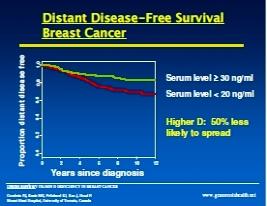
| 50% Less Breast Cancer Spread With Higher Vitamin D Levels. See Below, PJ Goodwin et al., U of Toronto See grassrootshealth.net |


Breast Cancer ChoicesTM
- These statements have not been evaluated by the U.S. Food & Drug Administration. The
information discussed is not intended to diagnose, treat, cure, or prevent any disease.
- This website is intended as information only. The editors of this site are not medically-trained.
Please consult your licensed health care practitioner before implementing any health strategy.
The information provided on this site is designed to support, not replace, the relationship that
exists between a patient/site visitor and his/her existing physician. This site accepts no
advertising. The contents of this site are copyrighted 2004-2012 by Breast Cancer Choices,
Inc., a 501 (c) (3) nonprofit organization run entirely by unpaid volunteers.
Contact us with comments or for reprint permission at admin@breastcancerchoices.org
Web page updated December 24, 2011
- These statements have not been evaluated by the U.S. Food & Drug Administration. The
information discussed is not intended to diagnose, treat, cure, or prevent any disease.
- This website is intended as information only. The editors of this site are not medically-trained.
Please consult your licensed health care practitioner before implementing any health strategy.
The information provided on this site is designed to support, not replace, the relationship that
exists between a patient/site visitor and his/her existing physician. This site accepts no
advertising. The contents of this site are copyrighted 2004-2012 by Breast Cancer Choices,
Inc., a 501 (c) (3) nonprofit organization run entirely by unpaid volunteers.
Contact us with comments or for reprint permission at admin@breastcancerchoices.org
Web page updated March 4, 2012
| Dr Mercola Debunks the Marshall Protocol |


| Home FAQ Strategies Discussion Iodine Hormones Contact Store |